




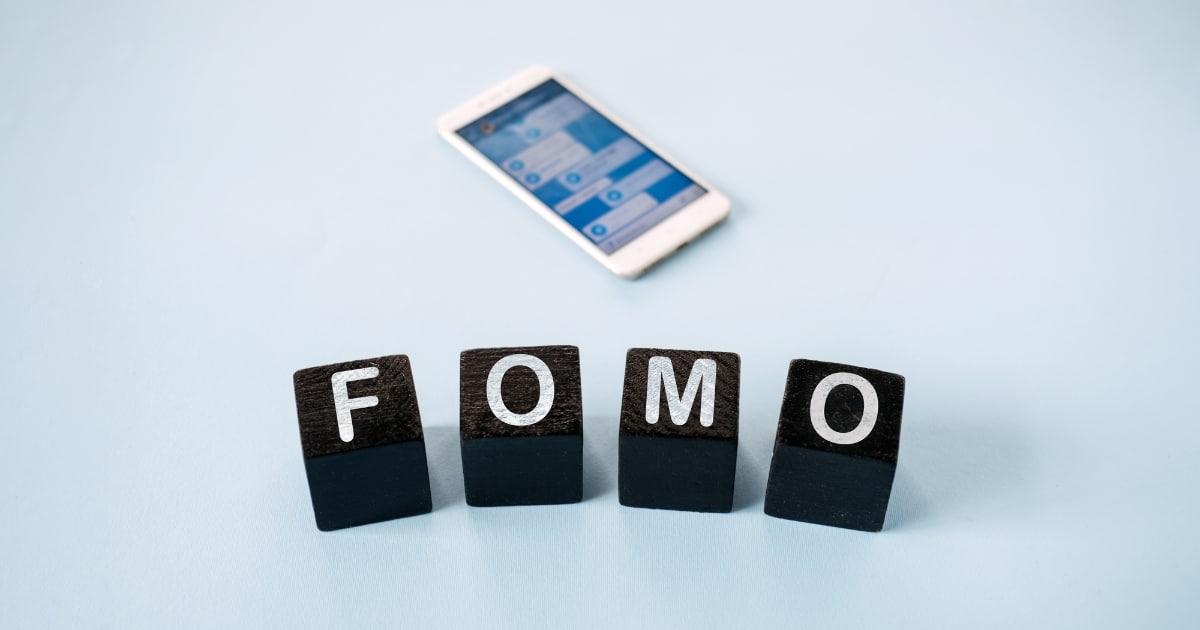
You refresh your feed for the third time in 10 minutes. A friend just posted photos from a concert you weren’t invited to. Your chest tightens. Your mind races through a catalog of recent social interactions, searching for signs you’ve been excluded. Within seconds, what started as casual scrolling has spiraled into full-blown anxiety. This cycle—constant checking, comparison, and the gnawing sense that everyone else is living a better life—defines the modern experience of FOMO, or fear of missing out.
Social media hasn’t just amplified this anxiety; it’s fundamentally changed how we experience it. For many people, knowing how to deal with FOMO is essential to protecting their mental health. But at what point does normal FOMO cross the line into something that requires professional support? Understanding that threshold matters as much as knowing the coping techniques themselves.
The Dopamine Loop That Keeps You Checking: Why Social Media Makes FOMO Worse Than Ever Before
The relationship between social platforms and FOMO starts at a neurological level. Every time you open Instagram or TikTok, your brain’s reward system activates, releasing dopamine in anticipation of novelty and social connection. When you see friends at events you weren’t part of, that dopamine hit turns into a crash, triggering neural pathways associated with physical pain.
What makes this cycle particularly insidious is the curated nature of online content. You’re not seeing your friends’ full lives—you’re seeing highlight reels edited for maximum impact. This constant exposure to others’ peak moments creates a distorted baseline for comparison, one where your everyday reality can never measure up to the carefully filtered version of life scrolling past your eyes.
Practical Strategies for Managing FOMO and Social Media Anxiety
Building healthier relationships with social platforms starts with recognizing that you have more control than the dopamine loop suggests. Digital detox strategies don’t require deleting every app or going off the grid permanently. Instead, they involve creating intentional boundaries that give your nervous system regular breaks from the comparison cycle.
One of the most effective approaches involves scheduling specific times for social media rather than allowing constant access throughout the day. This practice interrupts the automatic checking behavior that feeds anxiety. When you designate two or three windows for scrolling—say, during your morning coffee and after dinner—you regain agency over when and how you engage with these platforms. Between those windows, turning off notifications removes the external triggers that pull you back in.
Daily Practices That Interrupt the Comparison Cycle
- Implement app timers that automatically limit daily social media use to 30-45 minutes, forcing intentional rather than mindless engagement with platforms.
- Practice “reality checking” by reminding yourself that posts represent curated highlights, not complete narratives—what you’re seeing is the exception, not the rule of someone’s daily experience.
- Prioritize quality over quantity in social connections by scheduling regular in-person or phone conversations with close friends rather than relying on digital interactions.
- Develop a grounding routine for moments when FOMO spikes—five deep breaths, noticing five things you can see in your environment, or stepping outside for two minutes of fresh air.
| Strategy Type | Implementation | Expected Timeline for Relief |
|---|---|---|
| Notification Management | Disable all social app alerts; check platforms only during scheduled windows | Immediate reduction in triggered anxiety episodes |
| Curated Feed Adjustment | Unfollow or mute accounts that consistently trigger comparison or inadequacy | One to two weeks as algorithm adjusts to new engagement patterns |
| Analog Alternatives | Replace scrolling time with reading, exercise, or creative hobbies that engage focus | Two to four weeks as new habits form and dopamine pathways recalibrate |
| Social Media Sabbaticals | Take seven- to 14-day complete breaks from platforms quarterly | Noticeable perspective shift by day three to four of each break |
When FOMO Signals a Deeper Anxiety Issue That Needs Treatment
Self-help strategies work well for mild to moderate FOMO, but certain patterns indicate the issue has crossed into territory that benefits from professional intervention. Signs you need mental health help include persistent anxiety that doesn’t improve with digital boundaries, physical symptoms like insomnia or appetite changes, declining real-world invitations due to social media anxiety, or spending three or more hours daily on platforms despite wanting to cut back.
For some people, what presents as FOMO is actually a manifestation of generalized anxiety disorder or social anxiety that’s found a new outlet in digital spaces. The core issue isn’t the platforms themselves but underlying patterns—catastrophic thinking, excessive worry about others’ perceptions, or difficulty tolerating uncertainty—that make overcoming social comparison particularly difficult.
Knowing when to seek therapy for anxiety—and when self-help strategies aren’t enough—often comes down to functional impairment. Can you still meet your responsibilities at work or school? Are you maintaining meaningful relationships offline? Can you experience joy in your own activities without constant mental comparison to what others are doing? If the answer to any of these questions is no, professional support can help you develop more effective coping mechanisms.
Evidence-Based Treatments That Address FOMO
Cognitive Behavioral Therapy remains the gold standard for anxiety disorders, including those that manifest as problematic social media use. A CBT therapist helps you identify the automatic thoughts that fuel FOMO—assumptions like “If I’m not there, people will forget about me” or “Everyone else has more friends than I do”—and test them against evidence. You learn to recognize cognitive distortions such as mind reading, fortune telling, and filtering. Over the course of treatment, most people develop a more balanced perspective on their social lives and significantly reduce anxiety symptoms.
| Therapy Approach | Primary Focus | Typical Duration |
|---|---|---|
| Cognitive Behavioral Therapy | Identifying and restructuring thought patterns that drive compulsive checking and comparison | Eight to 12 weekly sessions |
| Acceptance and Commitment Therapy | Building psychological flexibility and values-based action despite uncomfortable emotions | 12 to 20 weekly sessions |
| Group Therapy | Normalizing experiences and practicing authentic connection in real time | Ongoing weekly participation for three to six months |
| Mindfulness-Based Stress Reduction | Developing present-moment awareness that interrupts automatic anxiety responses | Eight-week structured program |

Get Expert Help at San Jose Mental Health
Struggling with constant social comparison or finding that managing anxiety triggers has become overwhelming doesn’t reflect a character flaw—it reflects the very real psychological impact of living in an age of unprecedented connectivity. At San Jose Mental Health, our therapists understand these challenges. We recognize that figuring out how to deal with FOMO isn’t just about willpower—it requires understanding the psychological mechanisms at play and developing personalized coping strategies. We offer evidence-based social media anxiety treatment approaches specifically designed to address the intersection of social media use and clinical anxiety. Whether you’re looking for individual therapy focused on overcoming social comparison or want to explore group therapy where you can practice authentic connection in a supportive environment, our team provides compassionate, specialized care. You don’t have to navigate this alone—reach out today to schedule a consultation and take the first step toward reclaiming your peace of mind.
FAQs
The following are common questions people ask about the fear of missing out and when it’s time to seek professional help.
1. What are the main fear of missing out symptoms I should watch for?
Common FOMO indicators include compulsive phone checking (especially in social situations), difficulty staying present during activities because you’re mentally comparing them to what others might be doing, sleep disruption from late-night scrolling, and persistent feelings of inadequacy or social exclusion. Physical manifestations often include restlessness, racing thoughts when you can’t access your phone, muscle tension, and a sense of dread when you see others’ social posts.
2. Can FOMO actually cause clinical anxiety disorders?
While FOMO itself isn’t a standalone diagnosis, chronic patterns can trigger or significantly worsen generalized anxiety disorder and social anxiety. When these feelings interfere with daily functioning—affecting your work performance, disrupting sleep, or causing you to avoid real-world social situations—they’ve crossed into territory that benefits from professional mental health support. The constant state of comparison and perceived inadequacy creates sustained stress that your nervous system wasn’t designed to handle.
3. How long should a digital detox last to actually reduce anxiety?
Research suggests that even brief breaks from social platforms can produce measurable reductions in anxiety, but longer detoxes of one to two weeks allow your brain’s reward circuitry to recalibrate more fully. Many people find that quarterly week-long breaks, combined with daily limits during regular use, provide the most sustainable approach.
4. What’s the difference between normal FOMO and anxiety that needs treatment?
Normal fear of missing out is occasional and manageable—you might feel a brief pang seeing friends’ vacation photos but can refocus on your own activities without lingering distress. Clinical-level anxiety involves persistent distress that doesn’t resolve with self-help strategies, compulsive checking despite negative emotional consequences, avoidance of real-life activities because of social media-induced anxiety, or physical symptoms like insomnia and appetite changes. If the issue is affecting multiple areas of your life for more than a few weeks, professional evaluation is appropriate.
5. Which therapy approaches work best for social media anxiety treatment?
Cognitive Behavioral Therapy demonstrates strong effectiveness for addressing the thought patterns underlying problematic social media use and comparison anxiety, with most people seeing significant improvement within 8 to 12 sessions. Acceptance and Commitment Therapy helps build psychological flexibility around uncomfortable emotions, teaching you to experience FOMO without letting it control your behavior. Mindfulness techniques for anxiety develop present-moment awareness that directly counters the future-focused worry and past-focused rumination that fuel these concerns.