



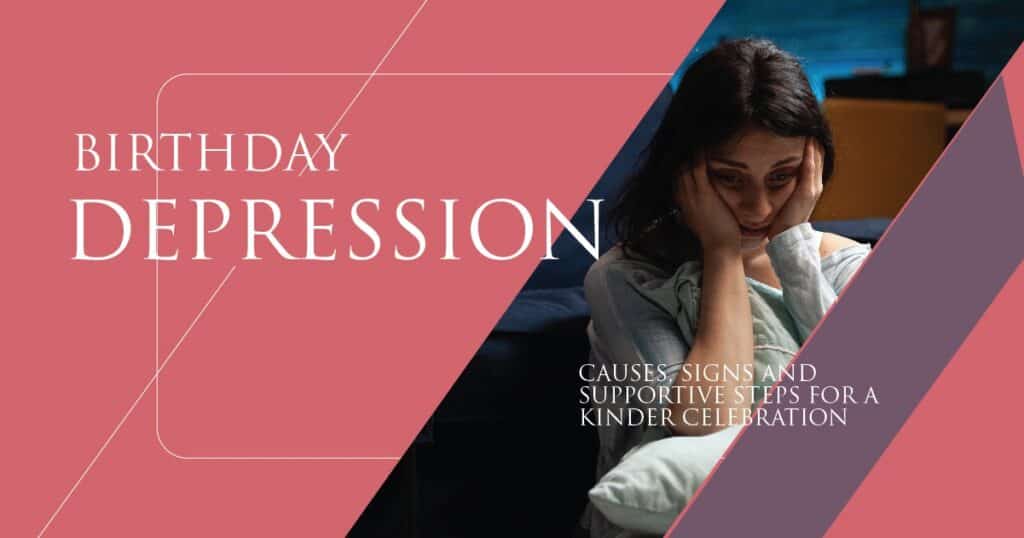
Understanding sadness on your special day – and how to meet it with compassion
Birthdays are often seen as milestones for joy – filled with laughter, celebration, and the warmth of being surrounded by those who care. Yet, for many, that same day can feel unexpectedly heavy. The countdown to cake and candles may stir up quiet unease, self-reflection, or even grief. If you’ve ever asked yourself, “Why do I feel sad on my birthday?” – you’re far from alone.
Birthday depression refers to feelings of sadness, emptiness, or anxiety that arise before, during, or after one’s birthday. It can appear subtly – a hollow feeling when others sing, or a deep wish to skip the day entirely. While often dismissed as “just the blues,” these emotions can point to deeper unmet needs or unresolved feelings around time, self-worth, or expectations.
In this guide, we’ll explore birthday depression causes, signs of birthday depression, and gentle ways to cope with these emotions. Drawing on mental health expertise and compassionate strategies from trusted resources like the San Jose Mental Health guide and the Mayo Clinic, we’ll discuss supportive steps that bring understanding – not judgment – to your experience, helping you create a kinder, more authentic celebration.
What Is Birthday Depression and Birthday Blues
Birthday depression, sometimes called the birthday blues, describes emotional distress that surfaces around the time of one’s birthday. While the world expects celebration, some individuals experience sadness, loneliness, or even irritability instead. This dissonance – between expectation and reality – can amplify feelings of guilt or confusion.
Common themes linked to the birthday blues include:
- Reflecting on unmet goals or milestones.
- Feeling forgotten or unseen by loved ones.
- Comparing one’s life to others’ social media highlights.
- Struggling with aging or fear of change.
- Reliving painful memories from past birthdays.
According to the San Jose Mental Health guide, this emotional shift is normal and often stems from the human tendency to measure life progress against time markers like birthdays. The key lies not in suppressing sadness but in understanding its message – an opportunity to explore what your emotions are asking for: rest, connection, or gentler self-compassion.

Comparing the Birthday Blues and Clinical Depression
| Emotional Experience | Duration | Common Triggers | Supportive Actions |
| Birthday Blues | Short-term (a few days) | Social pressure, expectations, reflection | Rest, connection, mindfulness |
| Birthday Depression | Lasts 1–2 weeks or longer | Loneliness, unresolved trauma, low self-worth | Therapy, journaling, open conversation |
| Seasonal Depression | Linked to reduced daylight | Winter months, lack of sunlight | Light therapy, exercise, vitamin D |
| Major Depression | Persistent and impairing | Biological and situational causes | Professional treatment and therapy |
Recognizing which category your emotions fall under can guide you toward the right type of care and support.
Birthday Depression Causes and Why Do I Feel Sad on My Birthday
Understanding the causes of birthday depression can help demystify those conflicting emotions that arise around your special day. While each person’s experience is unique, several factors commonly contribute:
- Social and emotional expectations: The idea that birthdays must be joyful can make authentic sadness feel “wrong.”
- Reflection on aging: Each birthday can bring awareness of time passing — what we’ve achieved, or what we fear we haven’t.
- Loneliness or social disconnection: Not everyone has a strong support network, which can make the day feel isolating.
- Unresolved trauma: Negative experiences tied to birthdays in the past may resurface.
- Pressure to celebrate: External expectations can feel draining, especially for introverts or those managing depression or anxiety.
Emotional stress often intensifies around significant dates because they activate reflection and comparison. Recognizing this pattern can turn the question “Why do I feel sad on my birthday?” into a compassionate acknowledgment of your own emotional truth.
Birthday Depression Symptoms and Signs of Birthday Depression
Signs of birthday depression can vary widely, but they often mirror patterns of sadness, irritability, or disinterest in the days leading up to the event. These feelings are valid and worthy of attention – even if they don’t align with how others expect you to feel.
Common birthday depression symptoms include:
- Feeling drained, anxious, or detached around your birthday.
- Avoiding party plans or social interactions.
- Comparing your accomplishments to peers or past expectations.
- Trouble sleeping or changes in appetite.
- Crying spells or unexplained irritability.
- A persistent sense of emptiness after the day passes.
If these symptoms last beyond a few days or impact daily functioning, reaching out for professional help is encouraged. Supportive counseling, cognitive behavioral therapy, or mindfulness-based approaches can help you better understand and manage emotional triggers.
Emotional vs. Behavioral Signs of Birthday Depression
| Emotional Indicators | Behavioral Indicators | Internal Dialogue | Helpful Response |
| Sadness or irritability | Avoiding calls or messages | “I don’t want to be a burden.” | Reach out for connection, even briefly |
| Anxiety or dread | Canceling plans | “No one really cares anyway.” | Challenge the thought with evidence of care |
| Loneliness | Isolating from others | “I’d rather be alone.” | Balance solitude with brief social contact |
| Emotional numbness | Overworking or distraction | “It’s just another day.” | Allow quiet reflection and self-kindness |
Awareness of these signs empowers you to respond gently – not with self-criticism, but with compassion and self-care.
Birthday Anxiety and Depression Around the Date
Many people feel subtle anxiety in the weeks leading up to their birthday – a sense of pressure to make it “perfect.” For others, birthday anxiety and depression may start days before, manifesting as restlessness, avoidance, or unease.
Possible emotional triggers include:
- Feeling undeserving of attention or celebration.
- Memories of disappointing birthdays or family tension.
- Social comparison fueled by social media highlights.
- Conflict between wanting connection and fearing rejection.
- Overthinking how to respond to greetings or gifts.
These feelings can coexist with gratitude, joy, or even humor – emotions rarely appear in isolation. Remind yourself that mixed feelings are part of the human experience and not a sign of failure.
If anxiety escalates, grounding techniques such as slow breathing, gentle stretching, or listening to calming music can help reset your body’s stress response.
Coping With Birthday Depression: Supportive Steps for a Kinder Celebration
When coping with birthday depression, the goal isn’t to “fix” your feelings but to approach them with understanding and gentleness. This might mean redefining what celebration looks like – choosing what truly nourishes you instead of what’s expected.
Supportive coping steps include:
- Reimagine the day. Plan something simple that feels peaceful, like a nature walk or breakfast alone at your favorite café.
- Set emotional boundaries. Politely decline overwhelming gatherings if they don’t serve your well-being.
- Connect with someone you trust. Even one authentic conversation can restore perspective.
- Write a reflection letter. Note your growth, challenges, and hopes for the coming year.
- Practice gratitude in small doses. Gratitude doesn’t erase sadness, but can coexist with it meaningfully.
According to the San Jose Mental Health guide, intentional planning that centers emotional comfort – not perfection – can reduce self-imposed pressure and encourage self-acceptance.
How to Overcome Birthday Depression: Gentle Ideas and Support
Healing doesn’t mean forcing positivity; it means giving yourself permission to honor what you feel and still seek light. These gentle steps to overcome birthday depression can help make the day feel more balanced:
- Seek professional guidance. Talking with a therapist can help explore recurring emotional themes and build healthier coping strategies.
- Limit social comparison. Social media rarely reflects reality — consider unplugging for a few days.
- Engage in self-compassion exercises. Speak to yourself as you would to a close friend in need.
- Give back. Volunteering or acts of kindness shift focus from self-judgment to purpose.
- Create new traditions. A personal ritual — like lighting a candle, cooking a favorite meal, or spending time in nature — can reclaim the day as your own.
You are not broken for feeling sad on your birthday. The day is simply another opportunity to care for yourself with tenderness, curiosity, and kindness.
Light the Candle Anyway: Finding Meaning in Small Moments
Even when your heart feels dim, small gestures of care can relight your inner flame. Birthdays are not a test of happiness but a reminder of your resilience – another year of growth, learning, and love.
If the day feels difficult, remember that you’re allowed to celebrate quietly or not at all. What matters most is that you treat yourself with the same warmth you offer others. For more compassionate guidance, counseling resources, and supportive therapy options, visit San Jose Mental Health. Their clinicians and community programs are designed to help you approach your next birthday – and every day – with gentleness and hope.
FAQs
1. What are the common signs of birthday depression, and how can you recognize them?
Common signs include emotional numbness, sadness, anxiety, and withdrawal from social plans. You might feel unmotivated to celebrate or struggle with low self-esteem. Recognizing these feelings as valid is the first step toward understanding and care.
2. How can understanding the causes of birthday depression help in managing birthday blues?
Awareness of causes – such as past experiences, loneliness, or social pressure – allows for proactive emotional planning. By identifying triggers early, you can create supportive boundaries and more peaceful traditions.
3. What are some effective coping strategies for dealing with birthday anxiety and depression?
Simple strategies like journaling, reaching out to trusted friends, or taking a mindful walk can ease emotional intensity. Therapy, self-compassion, and realistic expectations also help reduce stress and guilt.
4. Why do some people experience symptoms of birthday depression each year?
Repetitive emotional patterns often stem from unresolved feelings about aging, loss, or identity. Addressing these themes through reflection or therapy can gradually transform how you experience the day.
5. What gentle steps can be taken to overcome feelings of sadness on your birthday?
Practice small acts of kindness toward yourself, like rest, connection, or gratitude. Create your own version of celebration that honors how you truly feel, without pressure to perform happiness.